
Battle of Stratton 1643 – English Civil War tidal shift
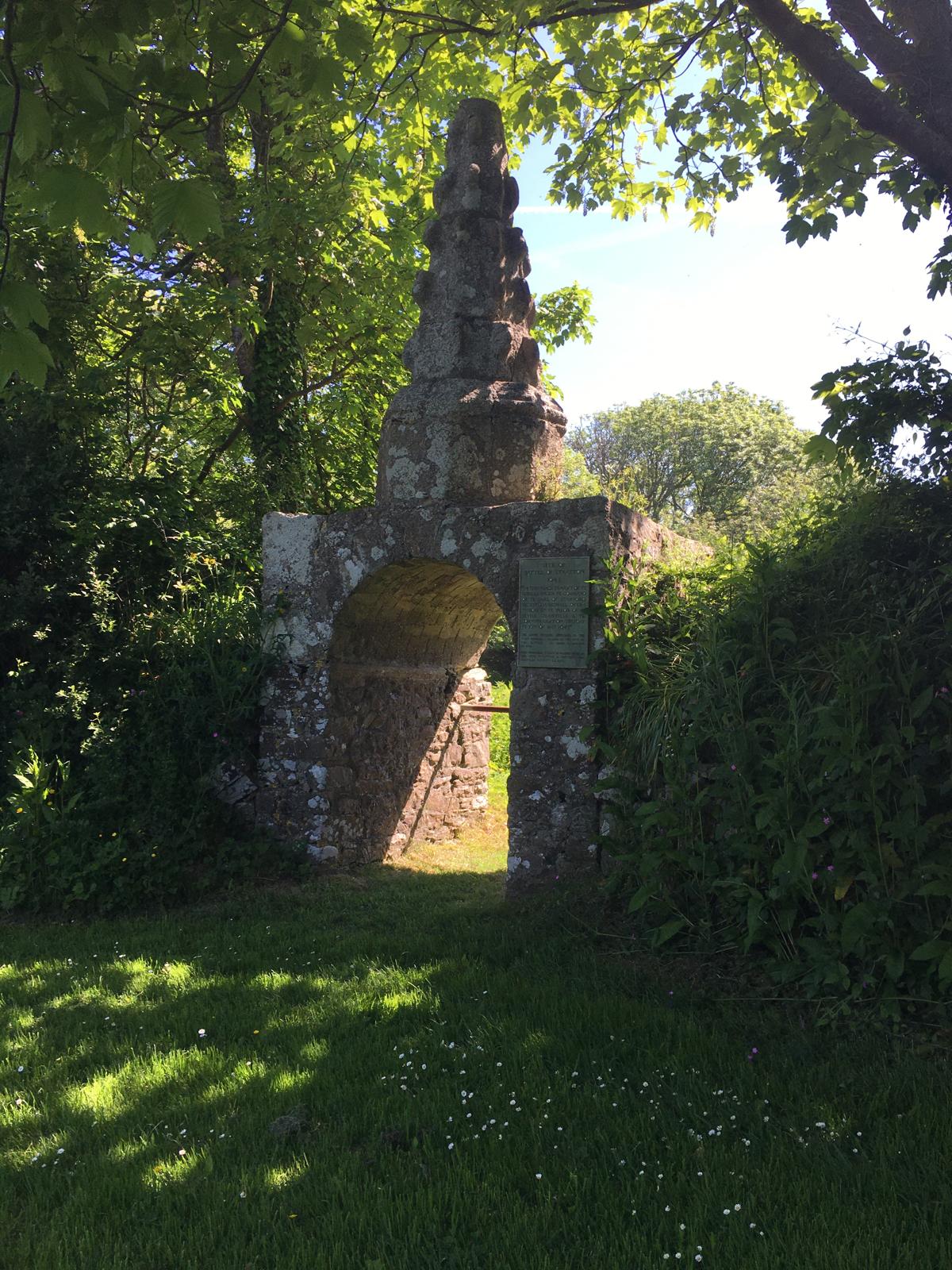
The Battle of Stratton in 1643 was not simply a minor, provincial, Cornish battle. In its own right, it was an extraordinary battle that saw a small royalist Cornish Army assault and defeat a much larger, well emplaced parliamentary army – against odds of 2:1. For twelve hours they fought their way through the Cornish ‘bocage’. For this reason alone, we should remember Stratton as one of the great battles of the English Civil War.
But it is the strategic impact of this battle that marks it as a tidal shift in the English Civil War. Not only did the Cornish halt an invasion, but they went on to change the balance of power in southern England. In doing so, they took Bath and Devizes. Their part in the Storming of Bristol in July 1643 helped secure the entire south west of England for the King, but at a terrible cost.
The Battle of Stratton forms part of the backstory to The Keys of Hell and Death, a novel by Charles Cordell. The historical notes that follow should be of interest to readers of the Divided Kingdom series as well as those interested in the history of the English Civil War.
This website also includes notes on the battles of Lansdown Hill, Roundway Down and the Storming of Bristol. You will also find articles on The General Crisis of the 17th Century, the English Revolution and Pike and Shot Warfare at English Civil War Notes and Maps.
Cornwall in the 1640s – Barbary corsairs & Ship Money
17th Century Cornwall saw itself as different, distinct from ‘Saxon’ England. It was proud, independent, with its own Stannaries parliament. Religious practice remained spiritual, high Anglican, with the veneration of Celtic saints, holly wells and groves. The Catholic Prayer Book Rebellion of 1549 was still fresh in the mind. In return, most English saw the Cornish as a race of heathen smugglers and wreckers in league with Spain.
Cornwall was rich in tin and fish. Its seamen played a significant part in the Newfoundland Trade, the first Atlantic triangular trade. However, by the 1630s, ever increasing numbers of Cornish ships, boats and seamen were lost. They were taken by Barbary Corsair pirates.
The Barbary Corsairs were not frightened of raiding ashore to seize slaves at places like Marazion, Penryn and Looe. In 1636 alone (a plague year), they seized over 1,000 Cornish men, women and children. They shipped them to North Africa to sell them as slaves in the markets of Salé and Algiers. Cornwall found itself a coastal frontier, increasingly attacked, raided, enslaved. It needed the protection of a proper navy.
These coastal attacks prompted Charles I to extend the Ship Money tax to all counties in England. The intention was that all should contribute to financing the navy – not just the coastal counties. It was a Cornish MP, William Noy, who first called for the change in 1634.
The King’s extension of Ship Money has long been cited as a cause of the English Civil War. But we should recognise its need to properly protect coastal communities from attack. The level of suffering in Cornwall and the inability of the navy to protect its people was very real.
English Civil War in West – Braddock Down, Saltash & ceasefire
Sir Ralph Hopton arrived in Cornwall in late September 1642 with just 160 cavaliers. Charged with bringing armed forces into the Duchy, he was arraigned to stand trial at the Truro Assizes. However, his legal argument was so strong that the court found in favour of the King and Hopton.
Cornwall declared itself entirely for the King. The few local parliamentarians were quickly driven out. However, the Cornish Trained Bands militia refused to fight outside Cornwall. Hopton, therefore, set about raising a volunteer army with Sir Bevil Grenville. This was to be the Cornish Army.
On 19 January 1643, the new Cornish Army defeated an invading parliamentary army under William Ruthven at the Battle of Braddock Down, near Liskeard. They went on to storm Saltash on 22 January 1643, blockade Plymouth and occupy Modbury.
However, the balance of power changed with the arrival of the Earl of Stamford with a parliamentary force of 4,500 and 3,500 militiamen of the Devon Trained Bands. Hopton’s Cornish Army suffered defeats at both Chagford (8 February 1643) and Modbury (21 February 1643). Royalist losses included the Cornish poet, courtier, friend to Ben Johnson, and cavalier trooper Sidney Godolphin.
Hopton was forced to withdraw from Devon, back into Cornwall. He also accepted a local ceasefire with Stamford by which each agreed not to cross the River Tamar. That ceasefire was to last until Sunday 23 April 1643.
Earl of Stamford’s Army – Parliamentary forces in the West
During the ceasefire, the Earl of Stamford raised and equipped three new parliamentary regiments of foot. This included enlisting some 2,000 seamen at Plymouth.
Stamford’s army included Sir John Merrick’s London ‘grey-coats’, an experienced foot regiment (about 600 men), Sir John Northcott’s Devon volunteers (1,200 strong) and Colonel James Chudleigh’s own regiment of foot. To these were added the Devon Trained Bands militia. Sir George Chudleigh commanded the 1,400 horsemen and dragoons.
By late April 1643, the Earl of Stamford lay incapacitated with gout at Exeter. However, Colonel James Chudleigh, a young (25 years) veteran of the Irish wars, remained active. As Major General, he prepared to take the offensive.
Cornish Army – Sir Ralph Hopton & royalists in Cornwall
The core of Hopton’s Cornish Army consisted of five Cornish volunteer foot regiments. The largest of these was Sir Bevil Grenville’s Regiment of Foot of 1,200 men, forming two battalions. Sir Nicholas Slanning’s ‘tinners’ were approximately 1,000 strong, whilst Lord Mohun mustered 900 and John Trevanion MP 700. The strength of William Godolphin’s Foot is unclear, but he received £200 in early Match 1643 for their pay.
The six battalions of Cornish foot were almost certainly organised into three tertias (brigades). Sir Bevil Grenville’s two battalions almost certainly fought together. We know that Slanning’s and Trevanion’s fought alongside each other at Stratton and Bristol. Lord Mohun’s and Godolphin’s are likely to have formed a third tertia. To these were added 600 cavaliers and dragoons under John Digby.
In April 1643, these royalist forces were spread thinly, guarding the crossing points along the river Tamar, as far south as Horsebridge, Gunnislake and Saltash. However, Hopton gave orders for those that could be spared to join him at Launceston on 23 April 1643 – the morning after the ceasefire was due to expire:
“Orders were likewise seasonable sent forth for the soldiers to draw to their colours and to appear at a rendezvous at Launceston on Sunday the [23rd] of April in the forenoon.”
Battle of Launceston – Beacon Hill, Sunday 23 April 1643
Before the ceasefire had ended, the young and active parliamentary Major General James Chudleigh mustered 1,500 foot and 200 horsemen at Lifton. They were only three miles from the river Tamar and Cornwall, and only four miles from Launceston.
On the morning of Sunday 23 April 1643, Chudleigh’s men seized Polson Bridge on the Tamar below Launceston. They quickly brushed aside the party of royalist dragoons that guarded it and advanced into Cornwall.
Chudleigh immediately made for Windmill Hill (then known as Beacon Hill) to the south of the Launceston. Even today, this high feature dominates the old medieval town and its Norman castle. If he could take the hill, both would be at the mercy of the Parliament’s guns.
At this stage, only Sir Bevil Grenville’s Regiment was in Launceston with Sir Ralph Hopton and Thomas Basset, the acting major general of the Cornish foot. With their devoutly spiritual Cornish soldiers, all were attending Sunday prayers in Launceston’s St Mary Magdalene Church.
The Fight for Windmill Hill – hedges & heat
Hopton gives a good account of what followed in his Bellum Civil:
“The next morning being Sunday [23 April 1643] while they were at Church at Prayers, the Enemy advanced over Polson bridge there being yet none of the rest of the Cornish army come up.
“So, Sir Ralph Hopton as soon as Prayers were ended, drew out of the Town with half of Sir Bevil Grenville’s Regiment [one battalion] and observing by the Enemy’s march that they made towards the Beacon Hill [now Windmill Hill] over the Town, he with that Regiment possessed himself with that Hill, and lined the hedges with musketeers at the foot thereof towards the Enemy’s march.
“At the same time came in very fortunately to him Col: Godolphin’s officers with his Regiment, and about an hour after they were engaged with the Enemy, came in Major Slingsby with the Lo: Mohun’s Regiment of foot, and about that time Sir Jo: Berkeley with diverse troops of horse and dragoons. Neither party had Cannon, only the Enemy had some… of brass with which they had played very smartly.
“The rest of the Cornish foot being Sir Nicholas Slanning’s and Col: Trevanion’s Regiments (for they had there none but voluntary Regiments) came not in till about seven of the clock at night. And about the same time came in to the Enemy a fresh Regiment [Merrick’s grey-coats] from Plymouth.
“So as during the heat of that whole day all that they could do was but to hold up the Enemy where he was, and to keep their own ground, which (God be thanked) they did with considerable loss to the Enemy but no great loss of their part, saving of Capt. Bassett a brother to Sir Fran: Bassett who was a very gallant Gentleman.”
Hopton’s Counter Attack – evening fight & Merrick’s arrival
Hopton continues his account of the Battle of Launceston, describing the royalist counter attack in the late evening:
“But as soon as all the Cornish Regiments were come in, the Commanders divided the foot into three parts, whereof one was commanded by Sir Ralph Hopton, another by Sir Jo: Berkeley and th’ other by Mr. Tho: Bassett, and three several ways charged up the Enemy’s body, which with the losses they had before received, and the opportunity they had of the night approaching for them to escape away quickly disordered them.”
Chudleigh later admitted to the loss of some ten parliamentary dead and forty wounded. The arrival of Merrick’s London ‘grey-coats’ from Plymouth almost certainly saved him from greater loss. At one point in the withdrawal, Chudleigh personally harnessed teams of oxen to save his artillery. Under cover of darkness, he withdrew to Lifton, then Okehampton.
The Cornish Failure to Pursue – explosion & disorder
Despite his victory and by now superior numbers, Hopton was unable to mount a pursuit. He blamed this partly on the difficult terrain and on an explosion that wounded a number of officers and soldiers. However, it is also clear that the Cornish soldiers took it upon themselves to celebrate their victory in the inns, taverns and alehouses of old Launceston:
“But the night coming on, and the ways being narrow and incommodious, they [the royalists] had little means to pursue them, but going to visit the ground where they fought, a train of powder with diverse arms which they had left in a little barn that they had possessed, suddenly blew up, and scalded many of the Cornish officers and soldiers.
“And so the Enemy retreated to Okehampton; and the Commanders of the Cornish army were enforced to stay from following of them a day or two longer then they would, by reason that the common Soldiers according to their usual custom after a fight grew disorderly and mutinous, and the Commanders were always very scant of means either to satisfy them or otherwise to command them.”
Windmill Hill – Coronation Park & defensive earthworks
Most visitors to Launceston today go to see its fine Norman castle. It is well worth a visit, with fine views from the top of its leaning round keep, from Bodmin Moor over hills and Tamar to Dartmoor. Much of old, medieval Launceston remains laid out as it was in the 11th Century. Some of its inns and pubs would still be familiar to Hopton’s Cornish foot soldiers.
For those with an interest in the British Civil Wars and the Battle of Launceston, St Mary Magdalene Church is worth a visit. Its high church adorned granite exterior is remarkable, as was Hopton’s calm finishing of Sunday prayers before battle.
Windmill Hill is also well worth the climb. The upper slopes are lost to housing. However, the top remains open ground, now Coronation Park. At the north end of the park, close to the gate are the traces of what was possibly a defensive sconce. We know that a defensive earthwork was constructed on Windmill Hill and a sconce would be typical. The traces are in the right position, slightly back from the crest.
Battle of Sourton Down – night ambush, 26 April 1643
Hopton finally managed to get the Cornish Army moving from Launceston’s inns on Tuesday 25 April 1643 and advanced into Devon. Again, his Bellum Civil tells the story:
“All things being gotten into reasonable good order the Commanders got the army to draw forth Tuesday [25 April 1643] in the evening as far as Lifton, and the next day marched to Bridestowe [following the B3260] intending to have quartered there.
“But as they were putting out their guards a party of the Enemy’s horse gave them an alarum close to that quarter, and at the same time there came a friend from Okehampton who assured that the Enemy at Okehampton was in very great disquiet and fear, that they had issued warrants to the Country to bring in draughts [horses and oxen] to remove their ordnance and ammunition, but none were obeyed.
“The concurrence of these two accidents begot a resolution in the Commanders presently to draw forth the army, and to march all night towards Okehampton being five miles eastward and to fall upon the Enemy there very early in the morning.”
Night March on Okehampton – confidence & complacency
Hopton describes how his Cornish Army assembled on Sourton Down. They then set out to surprise Okehampton. They were confident, perhaps complacent:
“The army being drawn forth upon the western part of Sourton Down before the night was shut in, was there put in order for a night march, and indeed it appeared upon view the handsomest body of men that had been gotten together in those parts all that war.
“They consisted of three hundred dragoons, but the most of them new levied, and about three hundred horse, and about three thousand foot all of the five voluntary Cornish Regiments….
“There were then likewise with the army four pieces of brass ordnance, whereof two were the 12 pounders taken from the Enemy at Liskeard [Braddock Down] under the command of Sir Nicholas Slanning, who was General of the Ordnance
“And so they marched [over Sourton Down on the B3260] with half of their dragoons, half of their horse, and half of their foot in the van, their ordnance in the middle, and th’ other half of the foot after the ordnance, the left wing of the horse in the next place, and the left wing of the dragoons in the rear of all.
“And so they marched, with scouts out before, and on every hand of them, that night over Sourton Down towards Okehampton, never as they conceived in better order, nor in better equipage, nor ever (which had like to have spoiled all) in less apprehension of the Enemy,
“For about 11 at night the Lo: Mohun, Sir Ra: Hopton, Sir Jo: Berkeley, and Sir Tho: Bassett being carelessly entertaining themselves in the head of the dragoons.”
Chudleigh’s Ambush – “fall on, fall on, they run!”
In Okehampton, James Chudleigh received warning of Hopton’s approach. He later wrote scathingly:
“By the intolerable negligence of our lying deputy Scout Master, we were surprised by the whole enemy body of horse and foot… and by the incomparable dullness of Sergeant-Major Price, the carriage of our Ammunition and artillery was dismissed, contrary to [my] orders expressed against it,
“So that I was forced to this sad Dilemma, to lose the Ordnance and all that we had here (which in all probability would have been the ruin of the whole Kingdom) or to hazard a desperate Charge.”
Chudleigh decided to risk all on an ambush. He gathered three troops of horse together, a total of 108 horsemen, and led them out of Okehampton and up onto Sourton Moor. Once there he deployed them in six divisions, each of eighteen men, across the down in ambush, in darkness, hidden below the crest of a hill. That hill was almost certainly the line of Yes Tor, High Willhays and West Mill Tor.
When the leading royalist dragoons were within range of their carbines, the first of Chudleigh’s divisions sprung the ambush. Captain Thomas Drake led them in a charge out of the darkness yelling: “Fall on, fall on, they run, they run!”
The effect was dramatic. The royalist dragoons broke, panicking the troops of horse following and sweeping away Hopton and the general officers with them.
Chudleigh’s remaining divisions charged out of the night to add to the shock and chaos. They heard the royalist password of “Launceston” and used it to increase the sense of confusion.
Tempest – thunder, lightning, gunpowder & the Devil
To add to the mayhem, the heavens interceded with a violent thunderstorm, “the night growing tempestuous with Hideous Claps of Thunder”. It is said that musketeers’ powder charges exploded in the lightning. The Parliamentary journal, Joyful News from Plymouth describes the scene:
“Lightning singed and burnt the hair of their [the Royalists’] heads and fired the gunpowder in their musket-pans and bandeliers which so lamentably scorched and burnt many of their bodies that they sent for 12 Surgeons from Launceston to cure them.”
Whether this is true or not, the leading Cornish battalions broke and ran, crying out that: “The militia fought not against them but the Devil.”
Grenville & Slanning’s Stand – saving the guns & the night
Hopton explains how Mohun’s and Grenville’s battalions made a stand. Slanning soon joined them and the situation stabilised:
“Major General Chudleigh gave a volley of carabines and charged the dragoons, which (being many of them new men took fright and routed, and fell back upon the horse, and so the Enemy riding mixt with them, routed half of the army up to the cannon, where the Lo: Mohun and Sir Bevil Grenville first made the stand;
“and Sir Ralph Hopton in the rout sent a messenger to Sir Nicholas Slanning being then in the rear, to advertise him of the accident, and to direct him to draw up the rear to the cannon, which was very well performed. And so the stand was well maintained, and the Enemy beaten off.
“Then the Commanders drew up the army in the best order they could in that place, being very dark and tempestuous weather, taking advantage of an old trench that they found upon the Heath, which they lined with musketeers on the left hand, and drew up all their horse and dragoons that were left upon the right hand, planting the four pieces of cannon just before the front and before it Swedes’ [Swedish] feathers.”
Parliament’s Foot Beaten Back to Okehampton
Chudleigh now ordered his foot up from Okehampton to break the Cornish battalions that still stood on Sourton Moor. Hopton continues his account of the action:
“And so they [the Cornish foot] stood expecting a second charge, wherein they were not altogether mistaken for Major General Chudleigh upon this success, sent and drew out all his foot and horse from Okehampton, which were in a short space discerned by their light matches advancing in a body towards them.
“As soon as they came within cannon shot the Cornish army gave them two pieces of cannon, whereby the Enemy understood that they were to do something else [other] than pursuing, which the body of his foot did not so well like of, so their hearts failing Mr. Chudleigh presented them a second charge with his horse up to the Swedish feathers, and so left them, and that night left his quarters [at Okehampton].
“But the Commanders of the Cornish army perceiving that they were much lessened, (though not above threescore men killed) thought it not fit to advance in the night, but made good their ground till the break of day, and then drew back to Bridestowe to refresh, not having yet heard any perfect intelligence of the Enemies motions.”
Escapes – a high sheriff in women’s clothing & a boy captain
Sourton Down was an embarrassing defeat for Hopton. From Bridestowe he retreated back to Launceston. However, the majority of his scattered troops did return to their colours over the next days. Two remarkable escapes from the chaos of the night are worth relating:
“Mr Carey the high Sheriff of Devonshire, was beaten of his horse, and his horse killed under him, but he knowing the Country by the advantage of night escaped to a Country man’s house, and from thence recovered his own house in South Hams in a woman’s apparel [clothing] from whence a week after he was conveyed back to the army.
“And Capt. Wrey (since Sir Chichester Wrey) being then but 15 years of age, and little of stature, but a spritely gallant youth, and then commanded a company in the Lo: Mohun’s Regiment that had the vanguard) was taken prisoner and carried down to Okehampton,
“but the troopers that took him being careless of him and thinking him to bee but a trooper’s boy he took the opportunity to make his escape in the night, and three days after returned into Cornwall with a dozen or 13 Musketeers of the stragglers that he had recollected.”
Sourton Cross Services – A30 pitstop & Civil War battlefield
Today, the A30 dual carriageway dominates the battlefield of Sourton Down. An average of some 27,000 vehicles cross Sourton Down each day (Department for Transport 2024). Sadly, few stop and remember the battle that raged yards from them.
The old road from Launceston to Okehampton via Lifton and Bridestowe (now the B3260) disappears under the A30 at Sourton Down. However, we can gain a sense of the battlefield from a quick pitstop at Sourton Cross Services and/or Cornridge View to the south.
March to Stratton – Civil War in North Cornwall – 12-15 May 1643
In the confusion of Sourton Down, the parliamentarians captured Sir Ralph Hopton’s portmanteau. This included a letter from the King ordering the Cornish Army to join forces with Prince Maurice and the Marquis of Hertford in Somerset. The King hoped to concentrate enough forces to overwhelm Parliament.
Receiving the letter at Exeter, the Earl of Stamford apparently “leapt out of [his] chair for joy”. Seeing an opportunity to frustrate the King’s plan, and perhaps personal advancement, Stamford seems to have immediately recovered from his gout. He set about mustering a sizable army to invade Cornwall.
The Parliamentary army that invaded Cornwall consisted of 5,400 foot, 1,400 horse and dragoons, 13 cannon and a mortar. The foot included Sir John Merrick’s London ‘grey-coats’, Sir John Northcott’s Devon volunteers and Major General James Chudleigh’s own Foot. Detachments drawn from every Parliamentary garrison in Devon and the Devonshire trained bands were added to these. Others were from Somerset.
Stamford led his army via Torrington in North Devon to Stratton. Here his army occupied a strong defensive position behind the River Strat and a high escarpment. Behind him, under his control, lay Kilkhampton and Stowe House, the home of Sir Bevil Grenville.
Hopton learnt of the Parliamentary invasion of North Cornwall, whilst at Launceston, on Friday 12 May 1643. He immediately called in the Cornish regiments that guarded the Tamar crossings. Slanning’s ‘tinners’ marched north from Saltash joining Lord Mohun’s from Liskeard. Together, they joined Trevanion’s stationed at Launceston, while Grenville covered the Parliamentary force about Stratton.
Together, Hopton mustered a total of 2,400 foot, 500 cavaliers and dragoons, and eight small artillery pieces. Although seriously outnumbered, he tells us:
“It was resolved to draw up towards them, and to try the hazard of a battle, and to prevent (if possible) their further advance into the Country.”
North Petherwin – a biscuit, prayers & skirmish, 14 May 1643
On Saturday 13 May 1643, Hopton and the Cornish Army marched north from Launceston. They probably crossed the River Ottery at Yeolmbridge. By evening they had reached the parish of North Petherwin. (Although west of the River Tamar, North Petherwin was claimed by Devon until 1966.) Hopton relates:
“The first night the Cornish army advanced no further than North-Petherton [North Petherwin], where in an open common [possibly Hellescott Green or around Langdon Cross] they lay together all that night, and as well the best of the officers as the soldiers were all very well contented with a dry biscuit apiece, for want of other provisions.
“The next morning being Sunday [14 May 1643] after Prayers read by the Chaplains in every Regiment, they began to advance further, and within a mile’s march were alarumed by a lusty party of the Enemies horse and dragoons, with which their forlorn hope entertained skirmishes by the space of almost two hours, and not knowing but that the Enemies whole army was at hand they drew up in order to receive them, but in short time, after they were discovered to be but only a party, and enforced to retreat.”
Week St Mary – alarm, skirmish & poverty, 14 May 1643
Hopton continues his account of the march in his Bellum Civil:
“And then the Cornish army marched on, but by reason of this interruption could not that night [14 May 1643] get any further than Mary-Weeke [Week St Mary], being about 8 miles from Launceston, and 4 from Stratton;
“No sooner were they come into Mary-Week but were presently entertained with a fresh alarm from the Enemy, who found them in so good a posture that they dared not make any further attempt upon them there.
“The Cornish army stood upon their guard all that night [14-15 May 1643] likewise, still in very great want of provisions, their own stores only affording a biscuit to a man, and the place so poor, that it was not able to supply them in any considerable proportion.”
H3: Battle of Bodmin – barricades & posse comitatus, 15 May 1643
At Bodmin, thirty miles to the southwest, as High Sheriff of Cornwall, Sir Francis Bassett was urgently raising the posse comitatus and funds to fight Parliament’s invasion. Every able-bodied male over the age of 15 years was called in, along with Cornwall’s silver plate and its tin ore.
Stamford dispatched a force of 1,200 Parliamentary horsemen and dragoons from his position at Stratton. With Sir George Chudleigh at their head, they rode to Bodmin to break up the posse comitatus and the royalist commissioners of array. It is likely that it was parts of this force that Hopton encountered at North Petherwin and Week St Mary, on his march to Stratton:
“The Enemy was so confident of their strength and number, that they had before sent away 1,200 of their horse and dragoons (which was almost all they had) to Bodmin to surprize the Sheriff and Commanders there, and to raise the County behind them.”
Hopton tells us of the battle that ensued at Bodmin. Colonel Nicholas Kendall of Lanlivery, MP for Lostwithiel, defended the town for more than an hour against Chudleigh’s horsemen and dragoons. He and at least ten others were killed in the fighting over Bodmin’s barricaded streets:
“Sir Geo: Chudleigh… with great jollity dispersed the Posse, and possessed himself of Bodmin, (though it was not without some loss being very gallantly held out an hour or two upon the Barracadoes by old Mr Kendall the Major of Lostwithiel, who though he lost his life killed ten of the Enemy before they could enter).”
The burial records for St Petroc’s great Church in Bodmin include ten men buried on 16 May 1643. These were probably locals. Strangers and Parliamentary casualties are unlikely to have been given space within the town’s graveyard.
Battle of Bude – Efford at Nanny Moore’s Bridge, 15 May 1643
Hopton and the Cornish Army did not march directly to Stratton. Instead, they swung west. Probably leaving the old road at Marham Church, they placed themselves between Stratton, the Earl of Stamford and the sea. Here, in the middle of what is now the resort of Bude, they seized a crossing over the River Neet.
“The next day [15 May 1643] by sun set they [the Cornish Army] were advanced so far as Efford house [Ebbingford Manor] being within the parish of Stratton about a mile from the Town, and immediately with their forlorn hope beat in a party of the Enemy’s, and recovered the passe [crossing] over the River [Neet] at Efford Mill which lay between them and the Enemy’s Camp.”
Ebbingford Manor belonged to the Arundell’s of Trerice. It remains today as a private house and events venue off Vicarage Road in Bude. Sir John Arundell built Efford Mill in 1577. It was a tidal mill beside what is now Nanny Moore’s Bridge in the centre of Bude. In 1643, the crossing at Efford Mill was still a ford.
Battle of Stratton 1643 – Stamford Hill, Tuesday 16 May 1643
The Earl of Stamford’s Parliamentary army was encamped on high ground outside Stratton. They occupied a strong defensive position on a steep sided ridge behind the River Strat, just north of the town. At the summit of what is now called Stamford Hill, an Iron Age round (fortified farmstead) commands views south and east into Cornwall.
Some 5,400 foot, 200 horsemen, 13 cannon, a mortar and an extensive waggon train of ammunition, provisions and baggage stood on Stamford Hill. We know that at least some of the artillery was positioned in and around the ditched and banked round on the summit.
The foot were probably organised as nine battalions, divided into three tertias (brigades). Although normally deployed in two lines, a frontage of about 2,000 yards (1.8 km) could be expected.
Against this force, the Cornish Army could only muster 2,400 foot, 500 cavaliers and 8 small artillery pieces. Not only did they fail to meet the expected ratio of 3:1 for an attacking force against a defended position, they were outnumbered by 2:1 in favour of the defenders.
Despite this, they decided to launch an assault. Hopton outlines the situation in his Bellum Civil:
“Then the Commanders of the Cornish Army called a Councill of war, where it was quickly resolved, notwithstanding the great visible disadvantage, that they must either force the Enemy’s Camp, while the most part of their horse and dragoons were from them [at Bodmin], or unavoidably perish.”
Grenville’s Flank March – Bude to Poughill & backs to the sea
Although determined to attack the Parliamentary position, the Cornish Army did not make a frontal assault against it. Instead, they made a flanking march to attack from the west. This avoided an attack across the River Strat and up the steep face of the escarpment on the eastern edge of Stamford Hill. It may have also been designed to attack the Parliamentary position from the rear.
However, this was risky. It placed the Cornish between a superior force and the Atlantic Ocean. Their backs were to the sea. In order to get there, they had to cross a single ford across a tidal estuary. They would then have been vulnerable on the march, strung out along the lanes from what is now Bude to the village of Poughill.
Almost without doubt, Sir Bevil Grenville was key to this plan and dangerous manoeuvre. His local knowledge would have been vital. The Grenville ancestral home at Stowe House, Kilkampton, was only five miles up the coast, behind the Parliamentary position. And his lands stretched as far south as the River Neet and the crossing at Efford Mill. However, we get a sense of the tension from Hopton’s account:
“And so in the beginning of that night a great part of the Army was drawn over that pass [ford at Efford Mill now Nanny Moore’s Bridge] and placed in the enclosures [fields] towards the Enemies Camp [Stamford Hill], and stood all night at their arms ready to receive the Enemy, which was expected to fall upon them.”
We know that low tide at Bude on the night of 15-16 May 1643 was at about 04:00. This was almost certainly an important factor in getting the artillery and foot across the ford, in the dark.
Hopton’s Plan of Attack – four lanes, four avenues of attack
Hopton’s account describes the Cornish battle plan:
“But nothing was acted till the next morning about the break of day, and then it was discerned that the Enemy had lined hedges within half musket shot of them [the Cornish], and then immediately musket shot began to be exchanged between both parties. And within a while after the rest of the Cornish Army was drawn over [the ford at Efford Mill] likewise, and the foot being about 2,400, divided into four parts, and the cannon being eight pieces equally distributed to every part.
“The first part commanded by the Lo[rd] Mohun and Sir Ralph Hopton, undertook to assault the Enemies Camp upon the south side [up Stamford Hill], next Sir John Berkeley and Sir Bevil Grenville upon the Avenue [Hill Lane] next to them upon the left hand, Sir Nicholas Slanning and Col Trevanion the next Avenue [Burshill Lane] to that upon the left hand of [them] and Sir Thomas Bassett and Col Godolphin upon the left hand of all [down Stamford Hill road],
“Mr John Digby with the horse and dragoons being then about five hundred, stood upon a Sandy-Common [probably Bude Golf Course] where there was a way leading up to the Enemy’s Camp, with order to charge anything that should come down that way in a body, but else to stand firm in reserve.”
Cornish Lanes & Hedges – ‘bocage’ & close quarter combat
Hopton continues his account with a description of the Parliamentary position on Stamford Hill. He goes on to state that the battle commenced at about 05:00:
“So, as they [the parliamentary army] then had with them but a few horse, but they had five thousand four hundred foot by poll as Mr Chudleigh their Major General afterward acknowledged. They had likewise thirteen pieces of brass ordnance and [a] mortar piece with a very plentiful magazine of provisions and ammunition, and all strongly encamped and barracadoed upon the flat top of a very high hill that had very steep ascents to them every way.
“In this order on both sides the fight began Tuesday the 16 day of May 1643 about 5 of the clock in the morning, The Cornish foot pressing those 4 ways up the Hill towards the Enemy and the Enemies obstinately endeavouring to keep them down.”
The terrain is not that of a classical open battlefield. It is undulating, sloped, divided by thick Cornish hedges and sunken lanes. It is the English Civil War equivalent of the Normandy ‘bocage’ battlefields of 1944. Most of the fighting would have been conducted at close quarters. Critically, attacking in this terrain would have required significant amounts of firepower and rapidly consumed ammunition loads.
Almost without doubt, the Cornish would have used their pike blocks to force their way up the Cornish lanes. They would have attempted to use the thick Cornish hedges for concealment and some protection from Stamford’s artillery on the hill. Wings of musketeers would have worked their way forward to clear the fields on either side of each lane. It would have been slow, gruelling, hard combat.
James Chudleigh’s Counterattack – Sir Bevil Grenville overthrown
Hopton describes a critical moment in the battle. After ten hours of fighting, the Cornish were running dangerously low of gunpowder for their muskets. Major General James Chudleigh chose this moment to lead a counterattack against the column led by Sir Bevil Grenville.
“The fight continued doubtful with many countenances of various events till about 3 of the clock in the afternoon, by which time the ammunition belonging to the Cornish Army was almost spent.
“It fortuned that on that Avenue [Hill Lane] where Sir Bevil Grenville advanced in the head of his Pikes in the way [lane], And Sir John Berkeley led on the musketeers on each side of him, Major General [James] Chudleigh with a stand of Pikes charged Sir Bevil Grenville so smartly, that there was some disorder, Sir Bevil Grenville, in person overthrown. But being presently relieved by Sir John Berkely and some of his own officers, he [Grenville] reinforced the charge, and there took Major General Chudleigh prisoner.”
Grenville was knocked down fighting on foot in the front rank of his own pike block on the lane. Officers fighting on foot was not unusual in the Civil War. The front rank of a pike block was a place of honour. Officers armed with their own partisan (spear), company standard or a pike often packed it.
Even the Earl of Essex, Parliament’s Lord General, stood with his own pike block at Edgehill armed with a pike. And we know that Grenville was mortally wounded fighting in the front rank of pikes at Lansdown Hill (5 July 1643), just seven weeks after Stratton.
Hill Lane, Hill Cottage & Anthony Payne – the ‘Cornish Giant’
Almost certainly, James Chudleigh led his pikes in a counterattack down what is known locally as Hill Lane. This is the lane that leads from Bude, via Broomhill Manor, up onto Stamford Hill. It is on this lane that Sir Bevil Grenville was knocked down. He would have known the lane well. It was on his land.
Hill Cottage on Hill Lane is an early 17th Century house and grade II listed building. It is contemporary with the battle and was possibly a precursor to Broomhill Manor. A large fireplace is dated 1621. Local tradition states that the house became a field hospital during the Battle of Stratton. A local vicar’s daughter is reputed to have saved at least one soldier, nursing him back to health in the house.
One royalist officer that almost certainly fought beside Grenville on Hill Lane was Anthony Payne, the ‘Cornish Giant’. Standing 7ft 4ins tall, he was Grenville’s friend, steward and ensign, and led the pike division of Grenville’s own company. His house is now the Tree Inn, Stratton. It was Anthony Payne who brought Grenville’s body back to Kilkhampton after Lansdown Hill.
Final Assault – Stamford’s last stand & Cornwall’s victory
Hopton’s Bellum Civil suggests that the Parliamentary position collapsed in the face of a final combined assault on Stamford Hill by all four Cornish columns:
“In fine [in the end] the endeavours of all the 4 parts of the foot succeeded so well, as growing nearer together as they ascended, and the Enemy giving way, and leaving the possession of some of their dead and some of their cannon to them.
“Between 3 and 4 of the clock the Commanders happened to meet altogether in one ground near the Top of the Hill, where having joyfully embraced one another they pursued their victory, and recovered the top of the Hill, which the Enemy had quitted in a rout.”
Parliamentary accounts place the blame for the collapse on the Devonshire Trained Bands militiamen. Stamford attempted to rally the volunteer regiments, but he could not hold them together. He fired a final salvo from the battery of artillery about the round (hillfort) before escaping to Bideford:
“The fight continued 12 hours, in all which time our poor Grey-coats and Volunteers did their parts, very manfully. But our base cow-hearted Trained [Bands] soldiers, as soon as they came to do service ran all away, and brought the whole army into an utter confusion.”
“After all this the Earl [Stamford] had 3,000 men left, store of ammunition and ordnance, which himself stood to, and entreated them to stand also. But no entreaty could persuade above thirty of them to stand.”
Casualties, Prisoners, Powder, Provisions & Public Prayer
Hopton tells of the tally at the end of the battle:
“In that fight God blessed the Kings party so well that they lost not [90] men in all, though they were the assailants, but killed about 300 of the Enemy in that place, and took 1,700 prisoners, whereof their Major General [Chudleigh] was one, and about 30 other officers.
“They [the Cornish] took likewise all their cannon, being (as is said before) 13 pieces of brass ordnance and a brass mortar-piece, and all their ammunition being 70 barrels of powder, and all other sorts of ammunition proportionable and a very great magazine of biscuit and other provisions, and all disposed of in very excellent order which was a very seasonable blessing to the Cornish Army that had suffered very great want of food for 3 or 4 days before, and had not 4 barrels of powder left in the world.
“The Commanders having gained the Camp and dispersed the Enemy after public prayer and thanks giving, upon the Hill disposed the main of the Army in as good an order as they could, sparing but a few loose horse for the pursuit, because they knew not how near the Enemy’s horse and dragoons might be upon their return.”
One (uncited) local report stated that the dead were “buried in trenches where they fell”. The ditches that surrounded the Iron Age round would seem to be a likely site for battlefield burials. They appear to have been filled in on either side of the monument.
Battle of Stratton’s Strategic Impact – tidal shift of 1643
The strategic impact of the Cornish victory at the Battle of Stratton should not be underestimated. It resulted in a significant tidal shift in the course of the English Civil War.
In early 1643 the royalist held areas of the North, Wales, Oxford and Cornwall were each threatened by parliamentary forces. If the King succeeded in joining these areas together, royalist forces would be freed. If the King could concentrate forces from Oxford, the North and Cornwall, the balance of power in the South of England would be changed in his favour.
Soon after their victory at Stratton, the Cornish Army marched into Devon. They succeeded in joining Prince Maurice and the Marquis of Hertford’s force at Chard. Together, as the King’s Western Army, they fought their way across Somerset. The goal was to reach the King at Oxford.
The Battle of Lansdown Hill, the Siege of Devizes and the Battle of Roundway Down followed over 5-13 July 1643. They form an extraordinary story. Each was a near run victory. Lansdown Hill was particularly costly. Among the casualties, Sir Bevil Grenville was mortally wounded and Hopton badly burned.
At the same time, the Queen fought her way south from York to Oxford with her own army and a convoy of continental munitions, arriving on 15 July 1643. The King now had the combined forces to threaten Parliament and London. However, the royalist council of war chose to take parliamentary held Bristol first.
At the Storming of Bristol, on 26 July 1643, the Cornish foot launched themselves repeatedly at the city’s Portwall. They suffered very significant casualties crossing the open ground of Temple Meads. Among the dead were both Sir Nicholas Slanning and John Trevanion.
The King’s Thanks – ‘the extraordinary Merits of Our County of Cornwall’
Of the 4,500 Cornish who marched from Stratton with Hopton, only 1,200 survived to return to Cornwall in August 1643. The King recognised Cornwall’s commitment in a letter (10 September 1643) published in every church in Cornwall. The King’s words are still proudly displayed in most churches across the Duchy:
“We are so highly sensible of the extraordinary Merits of Our County of Cornwall, of their Zeal for the Defence of our Person, and the Just Rights of Our Crown, in a time when We could contribute so little to Our own Defence, or to their Assistance…
“And of the wonderful success with which it hath pleased Almighty God (though with the loss of some Eminent persons, who shall never be forgotten by Us to reward their Loyalty and Patience) by many strange Victories over their and Our Enemies, in despite of all humane probabilities and all imaginable disadvantages;
“That as We cannot be forgetful of so great Deserts, so We cannot but desire to publish to all the World, and perpetuate to all time the memory of their Merits, and of Our Acceptance of the same.
“And to that end, We do hereby render Our Royal Thanks to that Our County in the most public and lasting manner We can devise, Commanding Copies hereof to be Printed and published, and one of them to be read in every Church and Chapel therein, and to be kept for ever as a Record in the same,
“That as long as the History of these Times, and of this Nation shall continue, the Memory of how much that County hath merited from Us and Our Crown, may be derived with it to Posterity.”
More English Civil War historical notes & maps
I hope you found these notes on the Battle of Stratton in 1643 useful. If you are planning to visit the locations in these notes, please do also check out the resources on the Battlefields Hub. This is a site run by the Battlefields Trust, a volunteer organisation dedicated to protecting and promoting Britain’s battlefields. Their guided battlefield walks are excellent.
You may also want to check out more of my English Civil War notes on the website. These include articles on the Battle of Edgehill, the Battle of Brentford and the Battle of Lansdown Hill.
You can also read about Pike and Shot Warfare. This article explains the clash between Dutch and Swedish military doctrines at Edgehill in 1642. This website also includes articles on The General Crisis of the 17th Century and the backdrop of The Thirty Years War. You can also read about the English Revolution and the Great Rebellion of 1642.
The Keys of Hell and Death – English Civil War novel
These historical notes provide the backstory to The Keys of Hell and Death, a Divided Kingdom novel by Charles Cordell. The story opens at the Battle of Lansdown Hill and closes with the Storming of Bristol in 1643. It includes accounts of the Siege of Devizes and the Battle of Roundway Down.
The Divided Kingdom books take a fresh approach. They are not based on a single hero. They do not take sides. Their voices – ordinary men and women – face each other in the chaos of Britain in civil war. They are both relatable and sharply relevant today. They are also as historically accurate as is possible.
Please do check out some of the writing at Divided Kingdom Books, including book tasters and a FREE ebook short story.
See More & Share
Finally, please check out the posts on Early Modern Life and the British Civil Wars. These include a post on Re-enacting the Battle of Edgehill in 2022. I hope they are of interest.
Alternatively, visit Facebook, Instagram or Twitter for more posts on my historical research, Living History and English Civil War fiction. These include upcoming events and opportunities to meet. Just follow on social media at #DividedKingdomBooks on:
If you want even more, why not join us in the Divided Kingdom Readers’ Club. You will receive a monthly email direct from me in which I share more notes from my research. If you think this is for you, click the link and join the Clubmen.
Spread the Word & Share
If you think others will like what you see, please share via email or your social media: